- Have any questions?
- +91 9048448440
- raphaphysiocare4u@gmail.com


Dry Needling Therapy
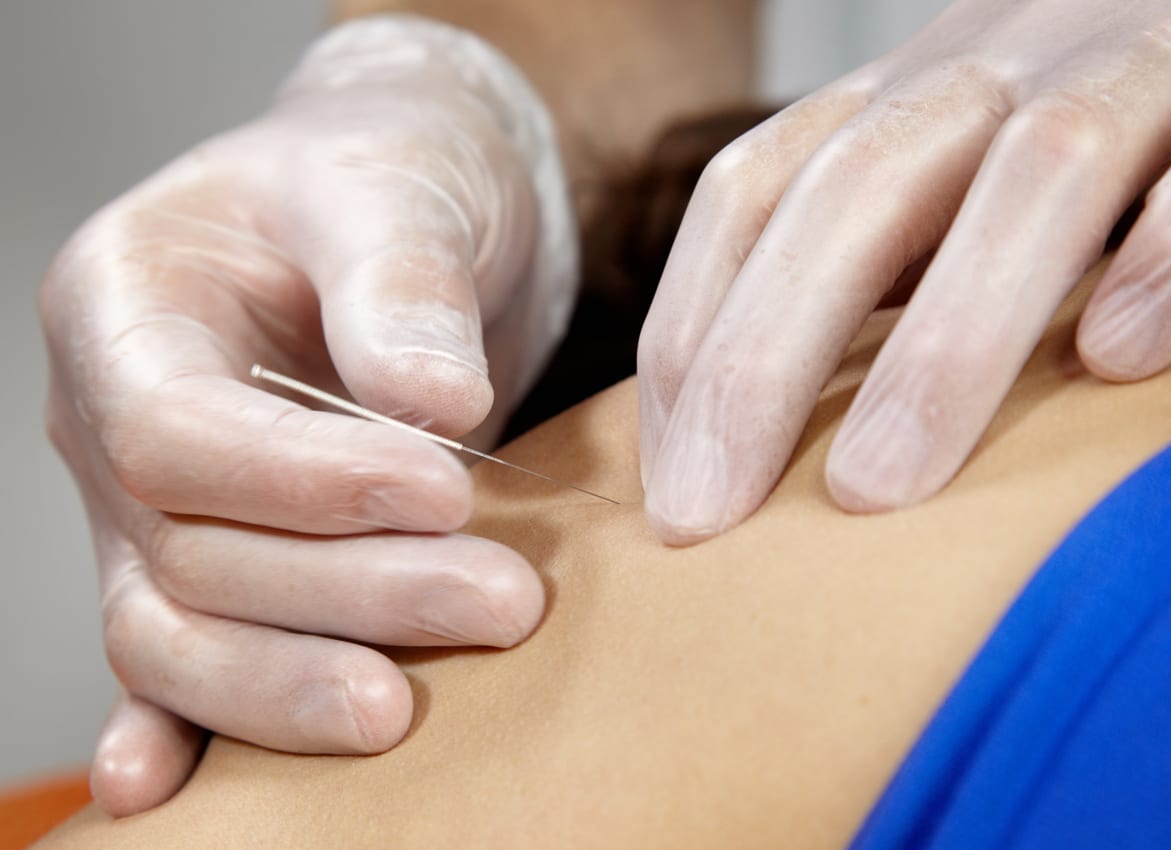
Trigger-point dry needling is an invasive procedure where a fine needle or acupuncture needle is inserted into the skin and muscle.
Overview Service
Trigger-point dry needling is an invasive procedure where a fine needle or acupuncture needle is inserted into the skin and muscle. It is aimed at myofascial trigger points (MTrP) which are hyperirritable spots in skeletal muscle that are associated with a hypersensitive palpable nodule in a taut band. Trigger point dry needling can be carried out at superficial or deep tissue level.
Dry needling has been shown to immediately increase pressure pain threshold and range of motion, decrease muscle tone, and decrease pain in patients with musculoskeletal conditions.
Its suggested mechanisms of action include:
Local Twitch Response: Dry needling can elicit ‘local twitch response’ which is an involuntary spinal reflex resulting in a localized contraction of the affected muscles that are being dry needled. Local twitch response can lead to alteration in the length and tension of muscles fibers and stimulate mechanoreceptors like A Beta fibers.
Effects on Blood Flow: Sustained contraction of taut muscle bands in trigger points might cause local ischemia and hypoxia. Dry needling causes vasodilation in the small blood vessels leading to increased muscle blood flow and oxygenation.
Neurophysiological effects: Dry needling may produces local and central nervous responses to restore hemostasis at the site of the trigger point which results in reduction in both central and peripheral sensitization to pain.
Remote Effects: Dry needling of distal MTrP has been found to have analgesic effect on proximal MTrP. The literature has conflicting evidence regarding the contralateral effect.